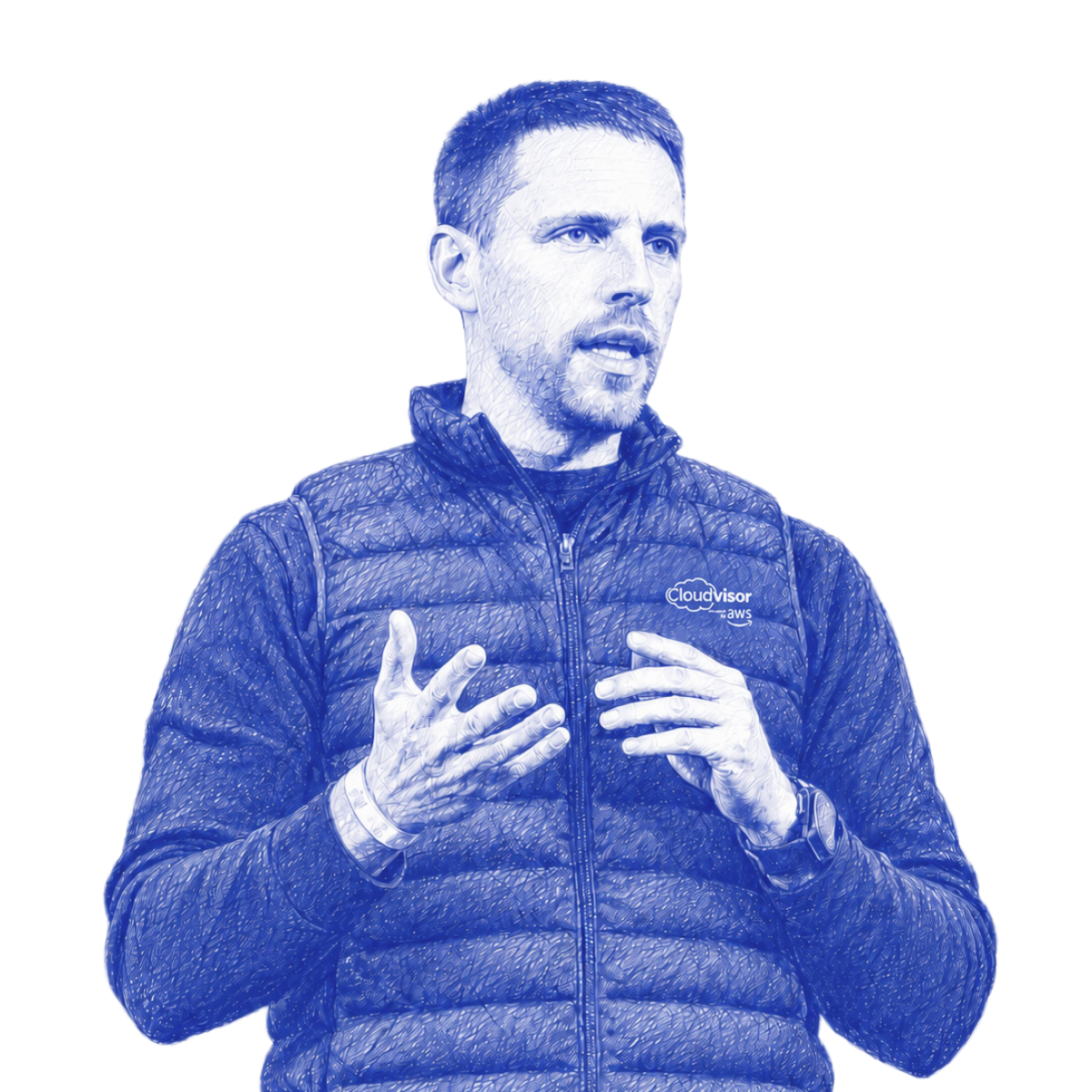
Evaldas Bieliūnas
Co-founder, Guideless
After six years at Vinted, seeing the problem repeat for years - Evaldas and Dovydas left comfort zone to launch Guideless. Out of stealth with 1M pre-seed round.
Why now — and how long did the idea sit before you moved on it?
The idea had been around for years. Dovydas had seen the problem repeatedly while building enterprise software and even built some earlier versions that we tested before the AI boom. But back then, neither the technology nor the timing was quite right for us to pull it off properly.
AI advancements changed that and made the product we actually wanted to build possible. Dovydas finally put everything together and soft-launched it in September 2025. We then spent months refining the product and experimenting with growth before fully committing to go all in.
Soon, we validated our hypothesis that employee training and onboarding were even less solved than customer onboarding, so we doubled down on this opportunity.
Overall, we probably could have done it somewhat earlier, but it also took us a while to grow some balls and leave our comfort zones. :)
How did you approach funding: how much to raise, which partners to take, and what the money is meant to buy you by way of milestones?
We dreamt of bootstrapping, but eventually realized we had to choose between 100% ownership and speed + scale. I convinced Dovydas that I’d at least find out how much we could raise and at what dilution, and then we’d decide whether it made sense.
I barely started fundraising before we had quite a few institutional investors super eager to proceed. At that point, we figured that if we were going to raise, we should do it properly. Raising just a few hundred k would still mean a lot of hassle and defocus, while overfunding would mean unnecessary dilution.
We did the math and landed at around €1M as the sweet spot: enough to build a proper team, accelerate the product, and properly test international expansion without giving away too much equity.
We also wanted investors we could trust and who could practically help us. Vytautas Atkočaitis, my long-time manager and now our angel investor, introduced me to Gytenis, a Partner at Superhero. We had an informal coffee, discussed different angles and approaches, and afterwards he introduced me to one of our current customers.
He then introduced me to Audrius, a Partner at Superhero, and Ralfas, an Associate, who led the conversation from there. These guys quickly proved they could move super fast and that there was no BS in how they approached things. All of that was quite a convincing sign that it was the right fit.
Lastly, Thomas and Mantas are extremely founder-focused and genuinely enjoy helping founders take businesses from 0 to 1. You probably couldn’t dream of better angels, so it was a no-brainer, and honestly quite humbling, when they agreed to join.
FIRSTPICK also proved to be incredibly supportive, fast-moving, no-BS investors, so I was super happy to have them join as well.
The whole thing happened in a pretty semi-formal, fast, and not-really-by-the-book way, which saved us a lot of effort. That’s one of the great things about the Lithuanian close-knit startup ecosystem.
Now the goal is simple: prove we can turn early traction into repeatable growth while moving from a documentation tool towards a broader operational knowledge platform. Roughly 70% of the money will go into building the core team, mainly product and our organic growth machine, and around 30% into paid growth.
The pain is clear, but the market is crowded and moving fast. Where’s the edge, and what turns it into a moat?
The TAM is massive, and despite the competition, we still see a lot of room to build a significantly better product. Today our edge is mainly the product experience and quality of the output. But that alone obviously isn’t a moat.
The moat starts with capturing workflows as structured operational context. The more a company uses Guideless, the more we understand about how it actually operates, eventually making training content creation and maintenance close to autopilot. Over time, that context also enables more advanced products, like AI-powered workflow auditing and automation.
The other part is distribution. Guideless is naturally very PLG-friendly: there’s almost zero friction to start, time to value is a few minutes, and every guide that gets shared or embedded becomes UGC that exposes Guideless to more potential users. Add team invites and referrals, and you can build a pretty strong growth flywheel around the product.
Then it’s about expansion. If we already have people inside a company who use Guideless, love it, and save significant time with it, introducing more advanced products that require deeper integrations becomes much easier.
So for us it’s basically land, expand and penetrate: win with a great product and instant value, spread organically within and between companies, and gradually become more deeply embedded in how those companies operate.