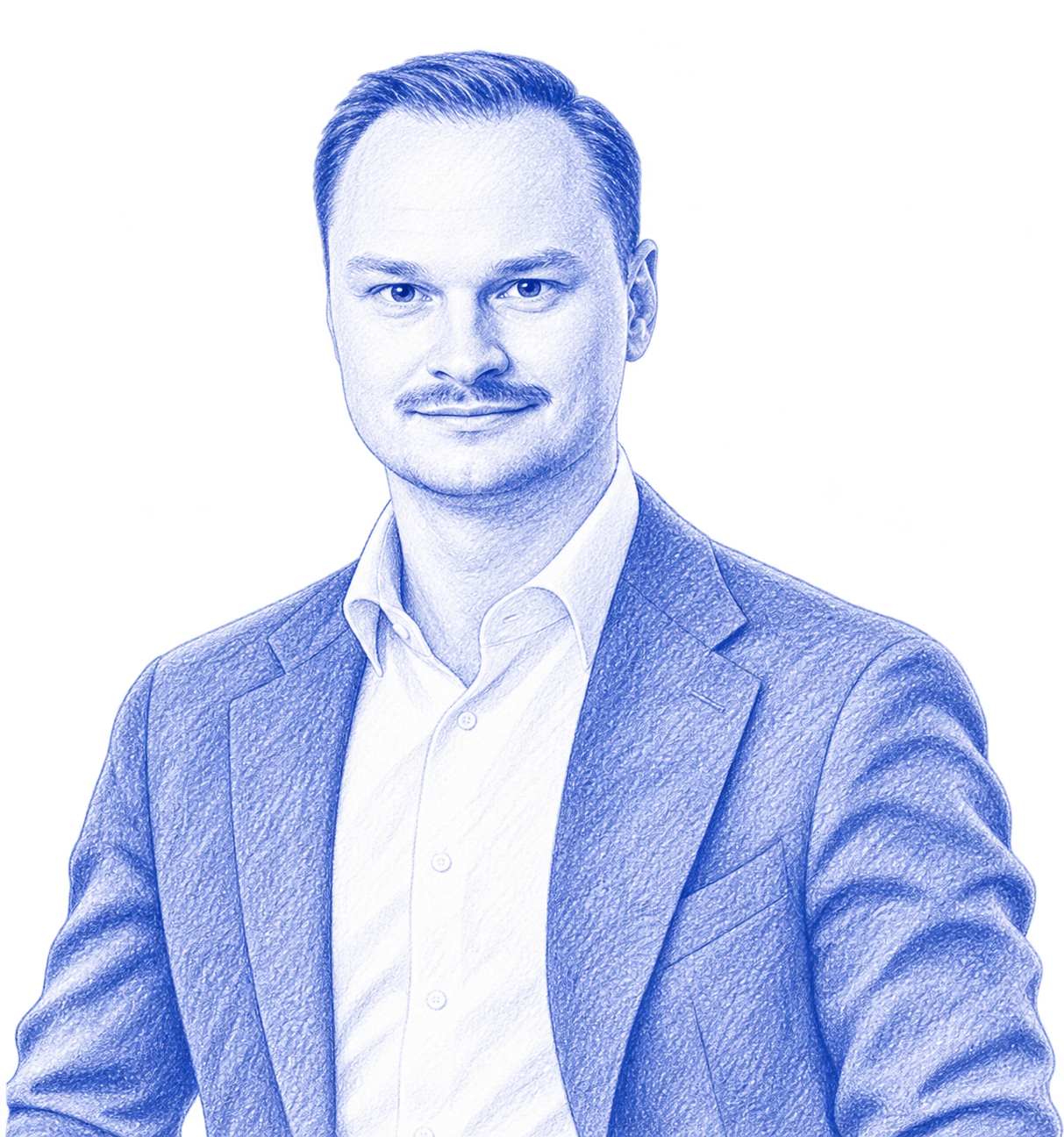
Dainius Sapežinskas
CEO, OBDeleven
If hardware is new moat, we had to chat to someone riding this wave. Dainius Sapežinskas is the CEO of OBDeleven, bootstrapped scale-up leading with car diagnostic tools - they help every driver diagnose, customize, and improve their vehicles.
Hardware used to be the hard part of the business. Now that anyone can build software, has the device become your moat?
Yes, although we did not always see it that way. For years, we thought of the device as the way into the car and the software as the real product. In the age of AI, that has flipped. A decent app can now be built in weeks. A hardware business cannot. Today our moat is three things working together: licences, hardware and brand.
The hardware is where OBDeleven started. OBDeleven founders were auto electricians who carried heavy laptops out to cars to diagnose and code them, and they wanted that workshop capability in something that fits in your pocket. Today, a device that fits in your palm holds around 150 components. We design it ourselves, from the hardware to the firmware to the app. That means years of engineering, testing on real cars, working with production partners, and managing supply chains and logistics.
The licences come from Volkswagen Group, BMW Group, Toyota Group, Mercedes-Benz and Ford US. They take years of trust to earn, and they let us make changes to a car with the manufacturer’s approval. A copied device cannot offer that.
The brand matters because you are letting a product change your car’s software, and you need to trust it. OBDeleven grew through word of mouth among people who know cars best, and almost 7 million vehicles have connected to it since 2014. That kind of trust cannot be generated.
Each layer makes the others harder to copy.
Bootstrapped, with 25% revenue growth and millions in profits - but what is the opportunity next, how large a company can get, and how?
We grew the business without outside investment, largely by building for people who already knew what an OBD port was. Selling to enthusiasts is a million-dollar business. Consumer electronics is a billion-dollar business, and that is where we are heading.
The bigger opportunity is with people who have never heard of an OBD port. There are roughly 1.5 billion passenger cars on the road worldwide, and even in our strongest markets, most drivers have never used a diagnostic tool. Their question is much simpler: “A warning light just came on. What does it mean, and what should I do next?”
The harder part is that most drivers do not want to think about their car at all. To reach them, OBDeleven is growing from a diagnostics tool into an assistant for the car, a bit like Strava is for running. Diagnostics remains the core: when a warning light comes on, the app tells you what is wrong, how serious it is and what a fair repair looks like. On top of that, it now helps on ordinary days too. It logs your trips, tracks fuel and running costs, reminds you about maintenance and shows battery health on electric cars.
Licensed by 10 automakers - the same brands could lock the port or build their own. What have you learned about these relationships through the years?
They could do either, and that is exactly why we chose to work with them, not around them. Working with official licences costs more and takes longer. But if your business depends on access to someone else’s vehicles, a shortcut can be closed overnight. Licences are the only way we have found to grow in a way that lasts.
Our first licence came from Volkswagen, and it started simply: the founders asked for it. That relationship is why we later became the first third-party solution able to make changes on Volkswagen Group cars.
The other lesson is that a licence is not a one-time deal. It gives us permission to offer specific functions, and as vehicle security changes, we have to adapt how those functions work. Our job is to make that simple for the driver while the manufacturer keeps control over what it authorises.
That gives both sides a reason to keep working together. The carmaker sets the rules for its vehicles, and we make those approved functions useful to drivers. Many households own cars from more than one brand and want one trusted tool that works across all of them.