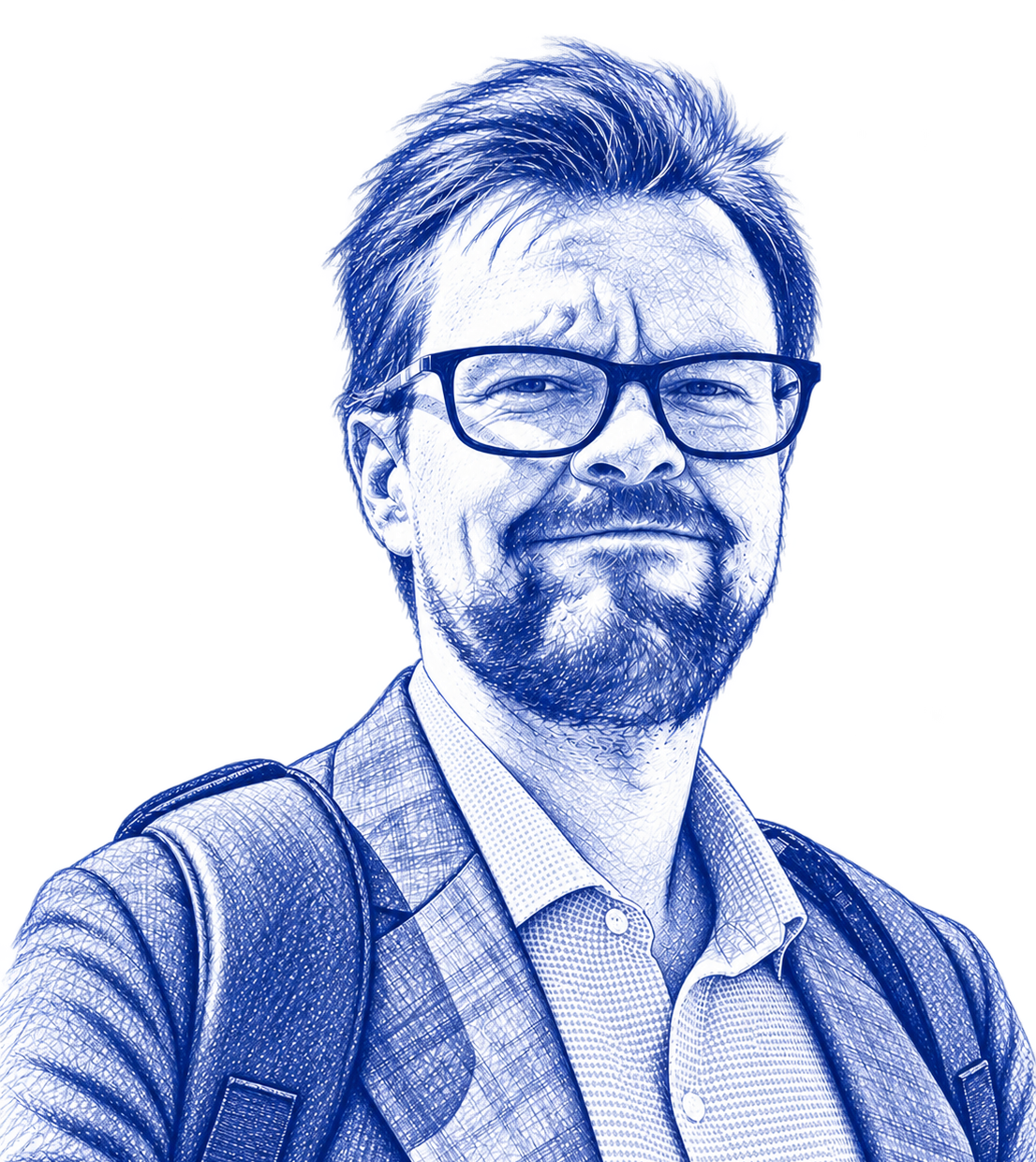
Laurynas Karpus
CEO and Co-founder, Biomatter
Biomatter announces impressive $18 million Series A financing led by Astanor, with UVC Partners, Inventure, and Metaplanet participating. Laurynas has been building towards this moment past eight years.
You started Biomatter in 2018, well before generative AI took off. How has AI changed the company and the opportunity?
Even though in 2018 generative AI was not yet a cultural phenomenon, we saw clear signals in research. We could not have predicted the full scope of what it became, but looking at early work like GANs and Google’s BERT, we had zero doubt that building in this direction for biology, for enzymes, was a no-brainer. We gained a lot more clarity in 2019, when we showed that our algorithms, inspired by that early ML research, can generate functional, novel enzymes (published in Nature Machine Intelligence, 2021).
Since then the AI race has been a force multiplier for Biomatter: the general large models are available to everyone, but our proprietary enzyme models and lab data is not, and every wave of external innovation lets us get more out of it.
What are the Series A top priorities for you: lab, US expansion, team hires?
All of the above! In the last funding period we demonstrated that the enzymes coming out of our computational and physical platform are really useful for global players. This year Thermo Fisher launched a product built on one we jointly developed.
With 50+ previously non-existent enzymes delivered, our goal now is to double down on the new paradigm we are creating: how people think about enzymes, how easily they can start building with custom ones, and how ambitious they can be with new products. For that we are opening a new enzyme R&D center in Vilnius, growing the team, and expanding our US presence.
Looking back on eight years of building, what advice do you most often give deep tech founders?
Some years ago I got a simple piece of advice: "treat commercial planning and execution like you treat technology R&D". Simple but really effective, and I have been sharing it ever since. For us it meant actively setting commercial hypotheses, testing them with customers and iterating, the same way we do in the lab. And spend as much time with potential customers as you can.