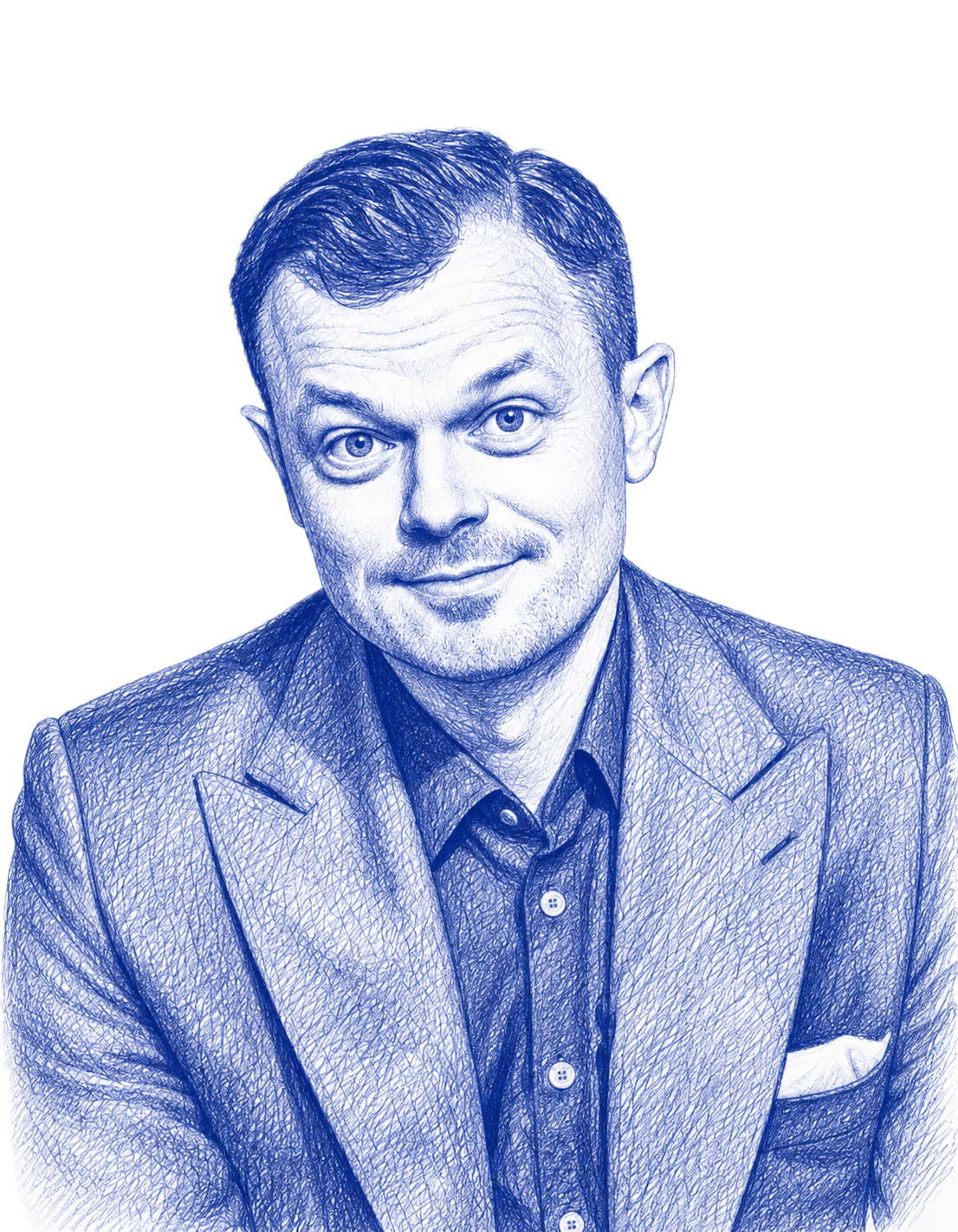
Vladas Jurkevičius
Co-Founder and CEO, Eldorado.gg & Co-founder, Humbility
We heard people calling Vladas "the genius founder". We talked how Eldorado and Humbility were born, how they are scaling now - and people as connecting thread. Outstanding companies in the making.
Is there a thread connecting a mechanical engineering degree from Cambridge, a rapidly growing gaming marketplace, and an algorithmic crypto trading firm?
The common thread is the people.
Many of the key people at both Eldorado and Humbility are friends I’ve known since high school at Vilnius Lyceum or from university.
The story actually started back in high school. In 2011, I began buying and reselling in-game assets on various online forums. By 2014, I had launched my first e-commerce stores focused on gaming assets. The business was doing well, and when I graduated from the University of Cambridge with a degree in Mechanical Engineering, I decided to pursue entrepreneurship rather than an engineering career.
In 2017, I invited my high school friend Lukas Deksnys to join me as co-founder, and we set out to build more ambitious companies together. Over the following years, we experimented with a wide range of ideas. Besides Eldorado and Humbility, we built a Twitch extension for streamers, a game price comparison website, a digital identity management platform, a Fortnite esports team, and several other ventures.
When Eldorado and Humbility began gaining real traction in 2021 and 2022, we made a conscious decision to focus exclusively on those two businesses. Since then, we’ve stopped chasing new ventures and instead channel all of our experimentation into growing and improving these two companies.
Where is Eldorado today, and what do you think is actually possible with this business? It looks like it’s accelerating impressively — what’s the ceiling?
Today, Eldorado processes a few hundred million dollars in GMV every year, and we’re continuing to grow rapidly.
When we started building Eldorado in 2018, we believed the ceiling for this type of marketplace was around $20–30 million in annual GMV, because that was roughly the size of the largest competitors at the time. As we’ve grown, we’ve realized the market is significantly bigger than we originally thought.
A big part of our mission is to help change how people think about in-game assets. More and more players see their digital items as something they own and should be able to trade freely, and we’re helping push that transition forward.
I believe that within the next few years, Eldorado will process more than $1 billion in annual GMV. The gaming industry continues to grow, digital ownership is becoming more accepted, and we’re still only scratching the surface of what can be traded safely and efficiently.
What kind of talent does this company need going forward, and what culture are you deliberately building?
We look for people who take ownership, think critically, thrive in a fast-moving environment, and genuinely enjoy games.
As the company grows, we’re especially looking for people who don’t just execute tasks but actively move the company forward by identifying problems, proposing solutions, and taking initiative.
One area where we’re probably different from many startups in Lithuania is our approach to remote work. We strongly believe in an office-first culture. In our experience, having people work together in the same space leads to better communication, faster decision-making, stronger collaboration, and ultimately better outcomes.
How do you actually run two accelerating companies at the same time?
I don’t anymore.
Until April 2026, I was CEO of both Eldorado and Humbility. Since then, Lukas Deksnys, one of Humbility’s co-founders, has taken over as CEO.
Both companies have reached a scale where I don’t believe it’s realistic for one person to lead them simultaneously. Today, I focus entirely on Eldorado, while Lukas leads Humbility.
That said, both companies have built very strong leadership teams. At this stage, the CEO’s role isn’t to make every decision — it’s to set the direction, think several years ahead, and help remove the biggest obstacles for the leadership team.